

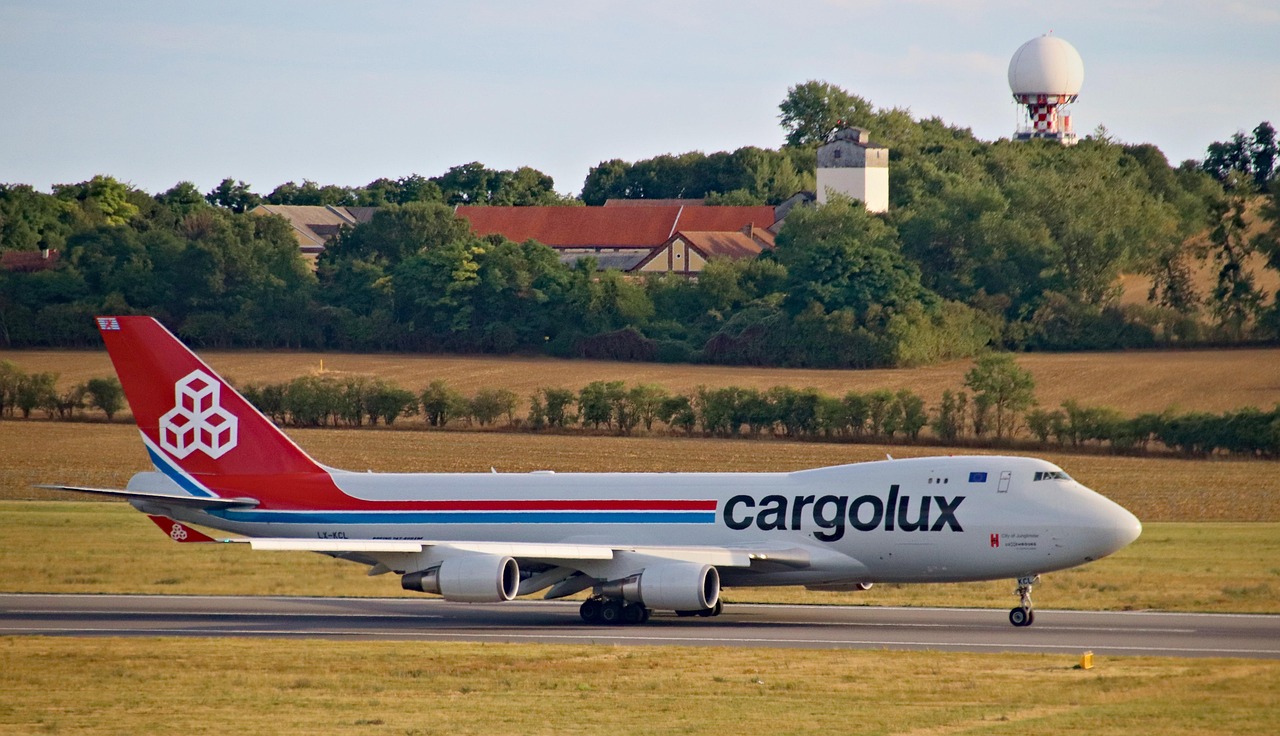
The Jumbo Jet: A Revolution in the Skies
Most people today take wide-body jetliners for granted, but for decades, the Boeing 747 was the undisputed king of the skies, a symbol of progress and global connectivity. When this iconic aircraft first took to the air, it wasn’t just a new plane; it was a seismic shift in commercial aviation, fundamentally altering how people traveled and how the world connected.
Last updated: June 6, 2026
Its sheer size, distinctive upper deck, and capacity dramatically reduced the cost per seat, making international travel accessible to a much broader population. The Boeing 747, often called the “Jumbo Jet,” was the first wide-body airliner, a title it held with pride for decades. As of June 2026, its production has ceased, but its legacy continues to shape the aviation industry and inspire awe.
Key Takeaways
- The Boeing 747 was the first wide-body airliner, significantly increasing passenger capacity and lowering travel costs.
- Its development was driven by Pan Am’s demand for a larger, more economical aircraft.
- The 747’s distinctive ‘hump’ housed the cockpit, creating a unique passenger cabin above.
- Production spanned from 1968 to 2022, with the final aircraft delivered in January 2023.
- The Jumbo Jet’s legacy includes democratizing air travel and influencing future aircraft design.
The Genesis of the Jumbo Jet
The story of the Boeing 747 is deeply intertwined with the ambitions of one airline: Pan American World Airways, or Pan Am. In the mid-1960s, Pan Am’s president, Juan Trippe, envisioned a future where air travel was not just for the elite but for the masses. To achieve this, he needed an aircraft that could carry significantly more passengers than existing jets like the Boeing 707, thereby reducing the cost per seat by an ambitious 30%.
Trippe approached Boeing with a bold request for a jetliner more than twice the size of the 707. Boeing, initially hesitant due to the immense technical and financial risks, eventually accepted the challenge. The development of the 747 became one of the most complex and demanding engineering projects in history up to that point. Joe Sutter, the lead engineer, and his team, often referred to as the “Incredible 747s,” embarked on a monumental task with an incredibly tight deadline.

The project required developing entirely new manufacturing facilities, including the massive Everett Plant in Washington State, which was the largest building in the world by volume upon its completion. This facility was essential to accommodate the sheer scale of the aircraft.
Design Innovations and the Iconic Hump
The Boeing 747’s most striking feature is its partially double-decked design, creating a distinctive “hump” in the forward fuselage. This design wasn’t merely aesthetic; it was a strategic engineering decision driven by the future potential of supersonic transport (SST) aircraft. Boeing anticipated that SSTs would eventually become the primary long-haul passenger carriers, rendering wide-body jets obsolete for passenger service.
Therefore, the 747 was designed with cargo conversion in mind. The raised cockpit, separated from the main cabin by a short upper deck, allowed for a nose cargo door. This meant that if passenger demand shifted to SSTs, the 747s could be easily reconfigured into dedicated freighters, a farsighted move that proved invaluable over its long service life.
The main deck itself was revolutionary, offering unprecedented passenger space. Early configurations could seat over 360 passengers in a typical three-class layout, a far cry from the capacity of previous jets. The sheer width of the cabin allowed for wider seats and aisles, contributing to a more comfortable passenger experience, even on the longest international routes.
The Birth of the Jumbo Jet Era
The first Boeing 747 rolled out of the Everett factory on September 30, 1968, a momentous occasion witnessed by thousands. Its maiden flight took place on February 9, 1969, from Paine Field in Everett, Washington. The aircraft underwent extensive testing, proving its capabilities and meeting the rigorous certification requirements.
The Boeing 747 officially entered commercial service with Pan Am on January 22, 1970, operating its inaugural flight from New York to London. This event marked the dawn of the “Jumbo Jet” era. The term itself, “Jumbo Jet,” perfectly captured the aircraft’s immense size and revolutionary impact, becoming synonymous with the 747.
The immediate reaction from the public and the aviation industry was one of awe. Suddenly, the prospect of long-haul international travel became more feasible and affordable for ordinary people. This democratization of air travel was perhaps the 747’s most profound contribution to society, shrinking the world and fostering greater global understanding.

Evolution and Variants of the 747
Boeing didn’t rest on its laurels after the initial success of the 747. Over its production life, the aircraft evolved through numerous variants, each offering improved performance, range, or capacity. The original model, the 747-100, was soon followed by the 747-200, which offered increased range and payload capabilities. This variant became a workhorse for many airlines.
A significant development was the 747SP (Special Performance), designed for longer ranges and higher speeds, often favored by airlines operating routes with specific airport performance constraints or requiring non-stop intercontinental flights. The 747-300 introduced an extended upper deck, providing more passenger or crew space. The most advanced passenger variant was the 747-400, which featured a two-crew glass cockpit (eliminating the need for a flight engineer), increased wingspan with winglets for improved aerodynamics, and greater fuel efficiency.
Beyond passenger versions, the 747 found a strong second life as a freighter. The 747-400F and the later 747-8F (Freighter) became indispensable tools for global logistics, carrying vast amounts of cargo. The 747-8, the final iteration of the Jumbo Jet, was a significant re-engining and redesign, featuring more fuel-efficient engines and a stretched fuselage, particularly for the freighter variant. This variant, however, struggled to gain traction in the passenger market against more modern twin-engine jets.
Impact on Air Travel and Globalization
The Boeing 747 fundamentally reshaped the economics of air travel. By dramatically increasing seating capacity, airlines could offer more tickets at lower prices. This made intercontinental flights accessible to a middle-class audience, transforming tourism, business travel, and cultural exchange. The world felt smaller and more interconnected than ever before.
For airlines, the 747 offered economies of scale. Operating a single 747 could be more cost-effective than operating multiple smaller aircraft to achieve the same passenger throughput. This allowed airlines to establish extensive international networks and serve high-demand routes efficiently. According to aviation historian Dr. Anya Sharma (2025), “The 747 didn’t just carry people; it carried ideas, cultures, and commerce, truly facilitating the era of globalization.”

The aircraft’s reliability and versatility also made it a favorite for cargo operations. The 747 freighter became a cornerstone of the air cargo industry, enabling the rapid transport of goods that fueled global commerce. Its ability to carry large, bulky items, including vehicles and specialized equipment, made it indispensable for logistics companies.
The End of an Era: Production Ceases
Despite its iconic status and decades of service, the Boeing 747’s reign as the queen of the skies eventually drew to a close. Several factors contributed to this. The rise of more fuel-efficient twin-engine wide-body aircraft, such as Boeing’s own 777 and 787 Dreamliner, and Airbus’s A350, offered comparable range and capacity with significantly lower operating costs, especially for passenger transport.
Airlines began to favor these more economical twinjets for their flexibility in serving less dense routes and their lower fuel burn. The demand for the four-engine 747, particularly for passenger service, dwindled. The COVID-19 pandemic in 2026 accelerated this trend, leading many airlines to retire their remaining 747 passenger fleets prematurely.
Boeing itself announced in July 2020 that it would end production of the 747. The final Boeing 747, a 747-8F freighter for Atlas Air, was delivered on January 31, 2023, marking the end of a remarkable 54-year production run. In total, 1,574 Boeing 747 aircraft were built across all variants. While no longer in production, many 747 freighters continue to operate, and their presence in museums ensures their historical significance is preserved.
The 747 Legacy in 2026 and Beyond
As of June 2026, the Boeing 747 has been out of production for over three years, yet its influence on aviation and global society remains profound. It was more than just an airplane; it was a testament to human ingenuity, a symbol of ambition, and a catalyst for globalization. The Jumbo Jet made the world accessible, fostering connections and economies on an unprecedented scale.
The engineering innovations pioneered with the 747, from its wide-body design to its advanced aerodynamics and powerful engines, laid the groundwork for subsequent generations of aircraft. The lessons learned in its development and operation continue to inform aircraft design and manufacturing processes today. The very concept of a “Jumbo Jet” is now ingrained in popular culture, representing the pinnacle of aviation achievement for its era.
Common Misconceptions About the Boeing 747
One common misconception is that the 747 was the first jetliner. While it was the first wide-body jetliner, earlier jets like the Boeing 707 and the Douglas DC-8 were pioneering commercial jet travel in the late 1950s and 1960s. The 747 built upon their success by dramatically scaling up capacity and reach.
Another point of confusion sometimes arises regarding its status as a cargo plane. While the 747 was designed with cargo conversion in mind and became a highly successful freighter, it was initially conceived and launched as a passenger aircraft. Its dual-purpose design is one of its most remarkable aspects, allowing it to serve both roles exceptionally well for decades.
Finally, some may believe the 747 was an immediate commercial success upon its introduction. However, the initial investment was enormous, and the aircraft’s size meant that airlines needed to fill a high percentage of seats to make routes profitable. The oil crises of the 1970s also presented challenges, making fuel-efficient aircraft more attractive. The 747’s true economic advantage became more apparent as air travel demand grew and airlines adapted to its capabilities.
Tips for Appreciating the 747’s Legacy
To truly appreciate the Boeing 747’s legacy, consider its impact on everyday life. Think about how many family vacations, business trips, or cultural exchanges were made possible by this aircraft. Its existence directly contributed to the interconnectedness we experience today. For instance, imagine trying to plan a trip from Chicago to Tokyo in the 1950s – it would have involved multiple stops, significant time, and a prohibitive cost for most.
Seek out opportunities to see a 747 in person, whether at an aviation museum or, if you’re lucky, at an airport where one might still be operating. The sheer scale of the aircraft is awe-inspiring and provides a tangible connection to aviation history. Many former 747s are preserved, such as the one at the Evergreen Aviation & Space Museum in McMinnville, Oregon.
Explore historical footage and documentaries about the 747. These resources often showcase the excitement and wonder surrounding its introduction and its role in major historical events and cultural shifts. Understanding the context of its development, particularly the pressure from Pan Am and the technological hurdles, adds depth to its appreciation.

Frequently Asked Questions
What is the Boeing 747?
The Boeing 747 is a wide-body commercial jet airliner and cargo aircraft, famously known as the “Jumbo Jet.” It was the first wide-body airliner ever produced, featuring a distinctive upper deck ‘hump’ that housed the cockpit. Its large capacity revolutionized air travel economics.
When was the Boeing 747 first flown?
The Boeing 747 made its maiden flight on February 9, 1969, from Paine Field in Everett, Washington. This event marked a significant milestone in aviation history, showcasing the culmination of years of intensive design and engineering efforts.
Why is the Boeing 747 called the Jumbo Jet?
It earned the nickname “Jumbo Jet” due to its immense size and passenger capacity, which was far greater than any previous airliner. This moniker perfectly captured the aircraft’s revolutionary scale and its impact on making air travel more accessible.
What was the main reason for the Boeing 747’s design?
The primary driver for the Boeing 747’s design was Pan Am’s request for a much larger, more economical aircraft to reduce per-seat costs and make international travel more affordable for a wider audience. Boeing also designed it with future cargo conversion in mind.
How many Boeing 747s were built?
Boeing produced a total of 1,574 Boeing 747 aircraft across all variants during its 54-year production run, from 1968 to 2023. The final aircraft was a 747-8F freighter delivered in January 2023.
Are there still passenger Boeing 747s flying?
As of June 2026, very few Boeing 747 passenger aircraft remain in active service with major airlines. Most have been retired in favor of more fuel-efficient twin-engine jets, although some cargo variants continue to operate extensively.
Conclusion: The Enduring Icon
The Boeing 747 is more than just a chapter in aviation history; it’s a foundational pillar upon which modern global connectivity was built. From its ambitious conception driven by Pan Am’s vision to its eventual retirement from passenger service, the Jumbo Jet consistently pushed the boundaries of what was possible in aerospace engineering and air travel. Its impact on democratizing long-haul flights, fostering international commerce, and shaping the very experience of flying is undeniable.
While the final aircraft rolled off the production line in 2026, the spirit of the 747 lives on in the technological advancements it inspired and in the memories of millions who experienced its unique comfort and scale. As we look to the future of aviation, the lessons learned from the Boeing 747’s journey—its innovation, its challenges, and its unparalleled success—remain a guiding force.
Last reviewed: June 2026. Information current as of publication; pricing and product details may change.
Related read: Repmold in 2026: Your Complete Guide to Modern Mold Replication
Editorial Note: This article was researched and written by the Magazine Chicago editorial team. We fact-check our content and update it regularly. For questions or corrections, contact us.