Aurö: Your 2026 Guide to Understanding the Northern Lights
🕑 25 min read📄 2,475 words📅 Updated Jun 6, 2026
🎯 Quick AnswerAurö refers to natural light displays in Earth's upper atmosphere, primarily the aurora borealis (Northern Lights) and aurora australis (Southern Lights). They are caused by charged particles from the Sun colliding with atmospheric gases, exciting them to emit light in vibrant colors.
main types, visible in polar regions.
Different atmospheric gases and altitudes produce the vibrant colors seen during an aurora.
Aurö patterns are shaped by Earth’s magnetic field, guiding charged solar particles.
Understanding aurö provides insight into space weather and Earth’s magnetosphere.
The Science Behind the Show: Solar Wind Meets Atmosphere
At its core, aurö is a cosmic collision. The Sun constantly emits a stream of charged particles, primarily electrons and protons, known as the solar wind. When this solar wind encounters Earth, our planet’s magnetosphere—an invisible magnetic field generated by our planet’s core—acts as a shield, deflecting most of these particles.
Last updated: June 6, 2026
However, not all particles are deflected. Some become trapped or guided by the magnetosphere, particularly towards the Earth’s magnetic poles. As these energetic particles funnel down into the upper atmosphere, they collide with atoms and molecules of gases like oxygen and nitrogen. These collisions transfer energy to the atmospheric gases, exciting them to higher energy states.
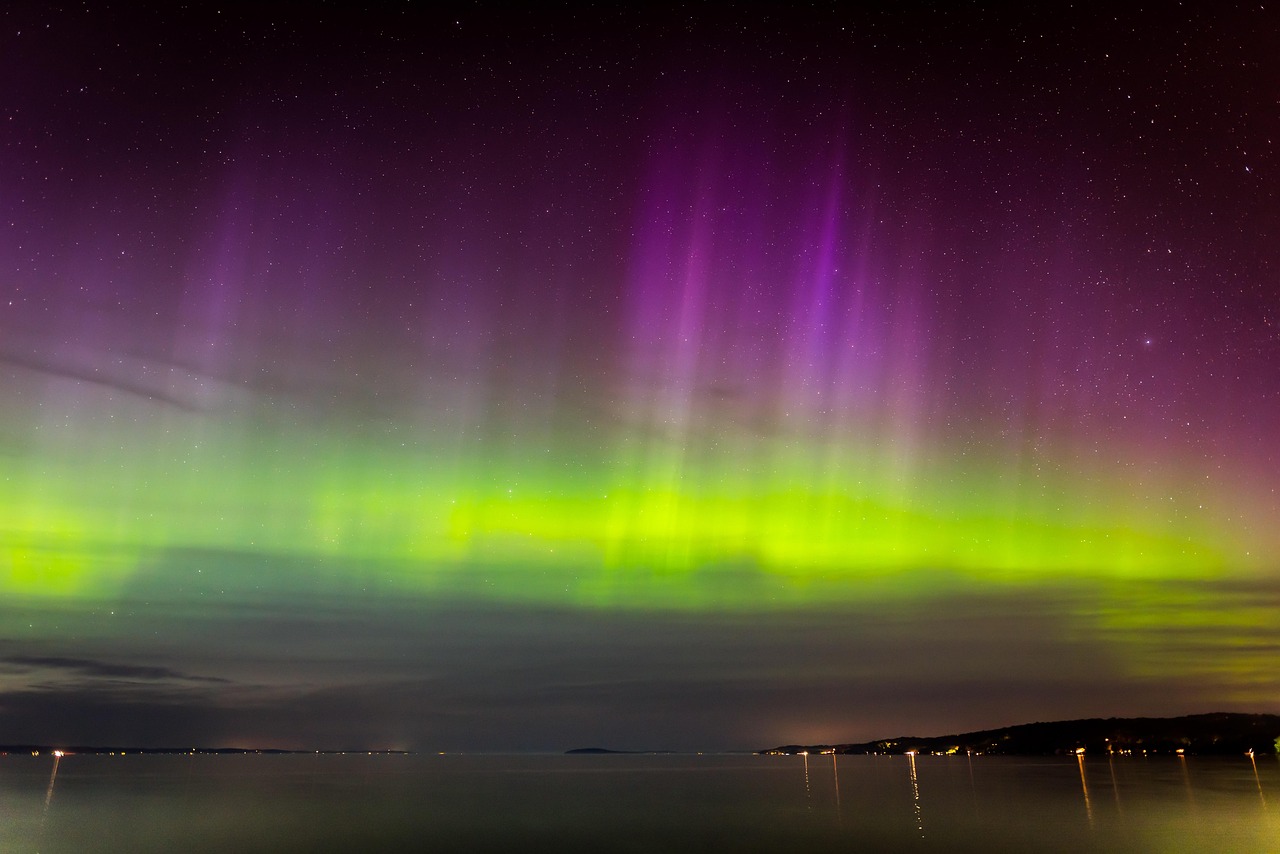
When these excited atoms and molecules return to their normal state, they release the excess energy as photons of light. The specific color of the light depends on the type of gas molecule involved and the energy level it reaches. For instance, collisions with oxygen at lower altitudes (around 100-300 km) typically produce the common green auroral light, while at higher altitudes (above 300 km), oxygen can emit red light. Nitrogen, on the other hand, often contributes to blue and purple hues.
The shape and movement of auroras are also dictated by the magnetic field lines. These lines act like conduits, directing the charged particles, which results in the shimmering curtains, arcs, and rays that characterize auroral displays. The intensity and frequency of auroras are directly linked to solar activity; periods of heightened solar wind or coronal mass ejections can lead to more spectacular and widespread auroral events.
The interaction between solar wind and Earth's magnetosphere is the fundamental cause of auroral displays.
AuröBoreal iss vs. Aurö Australis: Two Sides of the Same Coin
While the scientific principles behind aurö are identical, the terms aurora borealis and aurora australis refer to their geographic locations. The aurora borealis, or Northern Lights, is visible in the high-latitude regions of the Northern Hemisphere, such as Alaska, Canada, Iceland, Norway, and Siberia.
Conversely, the aurora australis, or Southern Lights, occurs in the high-latitude regions of the Southern Hemisphere, most commonly seen from Antarctica, southern Australia, New Zealand, and parts of South America like Patagonia. These displays are essentially mirror images, occurring simultaneously when solar activity is high enough to trigger widespread auroral activity across both polar regions.
Worth noting, while auroras are most intense and frequent near the magnetic poles, under very strong solar storms, they can sometimes be seen at lower latitudes than usual. In June 2026, reports from geomagnetic observatories confirmed auroral sightings as far south as the mid-United States and central Europe during a particularly powerful solar event, demonstrating the far-reaching impact of space weather.
Common Misconceptions About Aurö
Despite their beauty, auroras are often subject to misunderstanding. One common misconception is that auroras are silent. While most auroral displays are indeed silent to the human ear, some observers, particularly in very quiet conditions and at high latitudes, report hearing faint crackling or swishing sounds during intense displays. Scientific research into these sounds is ongoing, with some theories suggesting they might be generated by electrical discharges related to the auroral activity itself.
Another frequent misunderstanding is about the visibility of colors. While green is the most common color, many people believe auroras are always green. In reality, auroras can exhibit a stunning array of colors, including pink, red, blue, and violet, depending on the atmospheric gases and altitudes involved, as previously explained. The specific color perceived can also be influenced by light pollution and the observer’s eyesight.
The idea that auroras are a constant, predictable phenomenon is also misleading. Their appearance and intensity are highly dependent on solar activity. While there are cycles of solar activity, predicting the exact timing and strength of auroral displays remains challenging, even with advanced forecasting tools as of 2026. And, cloud cover and light pollution are significant practical obstacles for viewing, leading many to believe auroras are rare when they are, in fact, frequent but often obscured.
Finally, some believe auroras are purely an atmospheric event. While the light itself is atmospheric, its origin is extraterrestrial—the Sun. This connection to solar wind and space weather is crucial for understanding auroral behavior.
Planning Your Aurö Viewing Trip: Timing and Location
To witness aurö, strategic planning is key. The best locations are typically within the auroral oval, a band around the Earth’s magnetic poles where auroral activity is most concentrated. For aurora borealis, popular destinations include Fairbanks, Alaska; Tromsø, Norway; Abisko, Sweden; and Yellowknife, Canada.
For aurora australis, viewing opportunities are more limited due to fewer populated landmasses at high southern latitudes. Antarctica is the prime location, though inaccessible to most. Other options include Tasmania (Australia), Stewart Island (New Zealand), and Ushuaia (Argentina). As of June 2026, tour operators specializing in aurora viewing are prevalent in these key regions.
Timing is also critical. Auroras are visible year-round, but they are only observable during darkness. Therefore, the best viewing seasons are during the long nights of winter in each hemisphere. For the Northern Hemisphere, this typically means from late August to April, with peak viewing often in the months around the winter solstice (December-January). For the Southern Hemisphere, the prime viewing months are May to August.
Beyond season, time of night matters. Auroral activity can occur at any hour, but often peaks between 10 PM and 2 AM local time. However, keeping an eye on aurora forecast apps and websites is highly recommended, as strong solar events can trigger displays at unexpected times. Patience is also a virtue; auroral displays can be fleeting or last for hours.
Choosing a location away from city lights is paramount. Light pollution can wash out fainter auroral displays, making dark, clear skies essential. Even in prime viewing locations, driving or hiking a short distance away from towns can significantly improve the viewing experience.
The auroral ovals indicate the primary regions for viewing aurora borealis and aurora australis.
Factors Affecting Aurö Intensity
The brilliance and frequency of auroral displays are largely governed by solar activity. The Sun operates on an approximately 11-year cycle of activity, with periods of high solar maximum and low solar minimum. During solar maximum, the Sun is more prone to producing solar flares and coronal mass ejections (CMEs), which send bursts of charged particles towards Earth, leading to more intense and widespread auroras.
Geomagnetic storms, triggered by these solar events, are crucial. A strong CME hitting Earth’s magnetosphere can cause significant disturbances, exciting more atmospheric particles and thus creating brighter, more dynamic auroras. Real-time monitoring of solar wind speed and density, as well as the interplanetary magnetic field (IMF), allows scientists to forecast potential auroral activity. Organizations like the National Oceanic and Atmospheric Administration (NOAA) provide aurora forecasts based on this data. As of 2026, these forecasts have become increasingly sophisticated, offering a few days’ notice for potential strong events.
The orientation of the IMF is also a key factor. When the IMF is oriented southward (opposite to Earth’s northward-pointing magnetic field at the magneto pause), it can more easily connect with Earth’s field, allowing more solar particles to enter the magnetosphere and trigger auroras. This is why a strong southward IMF is often a predictor of intense auroral activity.
Atmospheric conditions play a role too. While the aurora itself is a high-altitude phenomenon, the transparency of the lower atmosphere—meaning the absence of thick cloud cover—is essential for viewing. Even the most spectacular auroral storm will be invisible if it’s hidden behind dense clouds.
Capturing the Aurö: Photography Tips
Photographing auroras can be incredibly rewarding, but it requires specific equipment and settings. A DSLR or mirrorless camera with manual controls is ideal, allowing you to adjust settings beyond those of a smartphone camera. A wide-angle lens with a fast aperture (f/2.8 or wider) is recommended to capture a broad view of the sky and gather as much light as possible.
Key camera settings typically include a high ISO (e.g., 1600-6400, depending on the camera’s capabilities) to capture faint light, a moderately wide aperture (f/2.8-f/4), and a shutter speed ranging from 10 to 30 seconds. Longer exposures capture more light but can result in streaky or blurred aurora if it’s moving rapidly. Experimentation is crucial, as ideal settings vary based on aurora intensity, cloud cover, and lens.
A sturdy tripod is non-negotiable to keep the camera perfectly still during the long exposures. Manual focus is also essential; set your lens to infinity focus, then slightly adjust back until stars appear sharp. Using a remote shutter release or the camera’s self-timer (e.g., 2-second delay) prevents camera shake when pressing the shutter button.
For smartphones, many newer models offer manual or pro modes that allow control over ISO, shutter speed, and focus. Apps like PhotoPills or Sky View can assist with planning and identifying auroral activity. Even with advanced smartphone cameras, results may be less dramatic than with dedicated DSLRs, but with practice, compelling shots are achievable. As of 2026, computational photography in high-end smartphones is improving aurora capture capabilities significantly.
Remember to dress warmly, as long periods of standing outside in cold temperatures are common. Protect your camera gear from condensation by keeping it in a waterproof bag and allowing it to acclimate slowly when moving between cold and warm environments.
Aurö and Your Well-being: Beyond the Visual
While the visual spectacle of aurö is the primary draw, the experience can also have profound effects on human well-being. Witnessing such a grand natural phenomenon can evoke feelings of awe, wonder, and connection to the universe. Psychologists as beneficial for increasingly recognizs this sense of awe mental health, reducing stress and promoting a broader perspective on life’s challenges.
The act of traveling to remote, often pristine locations to view auroras also encourages disconnection from daily digital routines and immersion in nature. This digital detox can be restorative, improving sleep patterns and overall mental clarity. The effort and anticipation involved in chasing auroras can also foster patience and resilience.
From a scientific standpoint, auroral displays are linked to geomagnetic storms, which can potentially affect technological systems, including power grids and satellite communications. While these effects are generally minor for the average person, they highlight the interconnectedness of Earth’s environment and our technological infrastructure. Understanding aurö is, in a way, understanding our planet’s protective mechanisms and its place within the larger solar system.
For those interested in the deeper scientific implications, resources from organizations like NASA and the European Space Agency (ESA) offer detailed insights into space weather and its impact. As of 2026, research continues into the subtle effects of geomagnetic activity on biological systems, although definitive links are still being explored.
Frequently Asked Questions About Aurö
Can you see aurö from Chicago?
While Chicago is not typically within the prime viewing zone for the aurora borealis, it’s possible to see auroras from Chicago during exceptionally strong geomagnetic storms. These events are rare but can push the auroral oval much further south, making faint displays visible even in mid-latitude cities.
What is the best time of year to see aurö?
The best time to see aurö is during the long, dark nights of winter. For the Northern Hemisphere, this generally means from late August through April, with the peak often around the winter solstice. For the Southern Hemisphere, it’s May through August.
Are auroras dangerous?
Auroras themselves are not dangerous to people on the ground. They occur in the upper atmosphere, far above where any direct effects could be felt. The associated geomagnetic storms can impact technology, but direct harm to humans is not a concern.
How long do auroras typically last?
Auroral displays can vary greatly in duration. Some are brief, lasting only a few minutes, while others can persist for hours, with periods of intense activity and lulls. The dynamic nature means they are constantly changing, making each viewing experience unique.
What causes the different colors in auroras?
The type of gas determins the colors of auroras molecules in the Earth’s atmosphere and the altitude at which they are excited by solar particles. Oxygen typically produces green and red light, while nitrogen contributes to blue and purple hues.
Can auroras be seen during the day?
Auroras are happening continuously, but they are only visible when the sky is dark enough to see their faint light. During daylight hours, the brightness of the Sun’s scattered light in the atmosphere overwhelms the aurora, making it invisible.
Conclusion: A Celestial Spectacle
Aurö, whether the dazzling aurora borealis or the elusive aurora australis, remains one of nature’s most captivating phenomena. As of June 2026, our understanding of its scientific underpinnings—from solar winds to atmospheric physics—has grown significantly, yet the sheer wonder of witnessing these lights persists.
By understanding the optimal conditions, locations, and scientific drivers, you can significantly increase your chances of experiencing this celestial ballet. Planning a trip, arming yourself with knowledge, and perhaps a camera, can turn a dream of seeing the aurö into a breathtaking reality.
Last reviewed: June 2026. Information current as of publication; pricing and product details may change.
Editorial Note: This article was researched and written by the Magazine Chicago editorial team. We fact-check our content and update it regularly. For questions or corrections, contact us.
M
Magazine Chicago Editorial TeamOur team creates thoroughly researched, helpful content. Every article is fact-checked and updated regularly.
Imran's editorial philosophy is rooted in three core values: truth, accessibility, and impact. He believes that great content should not just inform — it should move people to think differently, live better, and engage more deeply with the world around them. Under his leadership, Magazine Chicago has grown into a vibrant general-interest platform that cuts across geography, culture, and background.
His own writing spans a wide spectrum — from sharp political commentary and business analysis to warm, human-interest features and inspiring lifestyle pieces. Readers across the world connect with Imran's distinctive voice: clear, intelligent, and always grounded in real-world relevance.
Beyond his work at Magazine Chicago, Imran is a passionate advocate for independent media, digital literacy, and ethical journalism. He regularly mentors emerging writers and content creators, sharing the skills and mindset needed to thrive in today's fast-evolving media landscape.